Beam Deflection Calculator – Analyze Structural Deflection with Precision
The Beam Deflection Calculator is a powerful and user-friendly tool designed to compute the deflection of beams under various loading conditions. Whether you’re an engineering student, structural engineer, architect, or contractor, this tool enables you to determine how much a beam will bend or deform under load. This is crucial for ensuring the structural integrity and safety of buildings, bridges, and other frameworks.
What is Beam Deflection?
Beam deflection refers to the degree to which a structural element (typically a horizontal beam) is displaced under a load. It is an important consideration in structural engineering, as excessive deflection can lead to structural failure, sagging floors, cracked walls, or even collapse in severe cases. The amount of deflection depends on several factors including the type of load, the material of the beam, support conditions, beam length, and cross-sectional shape.
Why Use a Beam Deflection Calculator?
- Accuracy: Instantly and precisely calculate deflections using complex formulas and material properties.
- Efficiency: Save time during the design and analysis phases of structural projects.
- Design Optimization: Choose the appropriate beam dimensions, material, and supports to minimize deflection.
- Safety Compliance: Ensure that the structure adheres to safety standards and building codes.
Factors Affecting Beam Deflection
- Type of Load: Point load, distributed load, varying load
- Support Conditions: Simply supported, cantilevered, fixed, overhanging
- Material Properties: Young's modulus (E)
- Beam Geometry: Moment of inertia (I), length (L)
Common Types of Beams
- Simply Supported Beam
- Cantilever Beam
- Fixed Beam
- Overhanging Beam
Deflection Formulas for Standard Cases
1. Simply Supported Beam with Central Point Load
Formula: δ = (P × L³) / (48 × E × I)
Where:
P = Load (N)
L = Length of beam (m)
E = Young’s Modulus (Pa)
I = Moment of Inertia (m⁴)
2. Simply Supported Beam with Uniformly Distributed Load
Formula: δ = (5 × w × L⁴) / (384 × E × I)
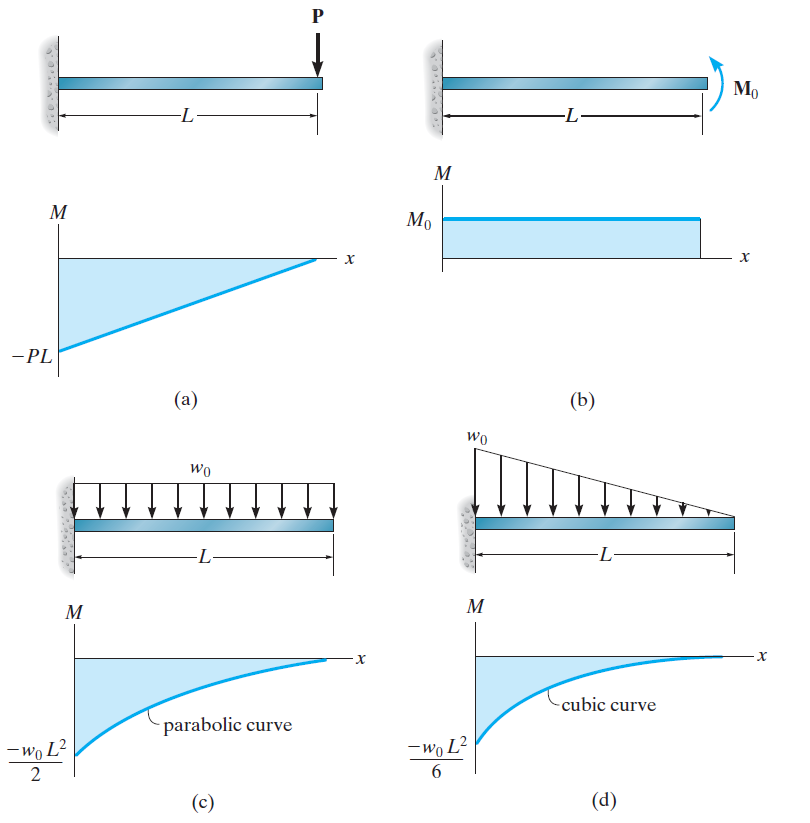
3. Cantilever Beam with Point Load at Free End
Formula: δ = (P × L³) / (3 × E × I)
4. Cantilever Beam with Uniform Load
Formula: δ = (w × L⁴) / (8 × E × I)
How to Use the Beam Deflection Calculator
- Select the beam type and loading condition.
- Enter the dimensions of the beam (length, width, height).
- Provide the material properties such as Young's Modulus (E).
- Input the type and magnitude of load(s).
- Click the "Calculate" button to view the deflection results.
Example Calculation
Example: Simply Supported Beam with a Central Load
Inputs:
Length (L) = 4 m
Load (P) = 1000 N
Young’s Modulus (E) = 200 × 10⁹ Pa (Steel)
Moment of Inertia (I) = 8.33 × 10⁻⁶ m⁴
Calculation:
δ = (1000 × 4³) / (48 × 200 × 10⁹ × 8.33 × 10⁻⁶) = ~1.2 mm
Units Commonly Used
- Load: Newtons (N), Kilonewtons (kN)
- Length: meters (m), millimeters (mm)
- Young’s Modulus: Pascals (Pa), GigaPascals (GPa)
- Deflection: millimeters (mm), meters (m)
Material Properties for Common Beam Materials
- Steel: E = 200 GPa
- Aluminum: E = 69 GPa
- Concrete: E = 30 GPa
- Wood: E = 10–15 GPa
Moment of Inertia for Common Cross Sections
- Rectangular: I = (b × h³) / 12
- Circular: I = (π × d⁴) / 64
- I-Beam: Varies based on flange and web dimensions
Design Tips to Reduce Deflection
- Use materials with a higher Young’s modulus
- Increase the moment of inertia by selecting a larger or more efficient cross-section
- Reduce the span length
- Add intermediate supports
Practical Applications
- Bridge and building construction
- Floor joist and ceiling beam design
- Mechanical component analysis
- Load testing in structural labs
Frequently Asked Questions
Q1: What is an acceptable deflection limit?
This varies by application, but a common rule is L/360 (e.g., for a 10 ft beam, max deflection = 10 ft ÷ 360 = 0.33 inches).
Q2: Can I calculate deflection for complex beam shapes?
This calculator is intended for standard shapes. For complex geometries, finite element analysis (FEA) is recommended.
Q3: What if my beam has multiple loads?
Use superposition to calculate individual deflections for each load and add them together.
Conclusion
The Beam Deflection Calculator is an essential tool for accurately evaluating structural deflection. It simplifies complex engineering formulas into user-friendly inputs, helping you design safer, more efficient, and code-compliant structures. Whether you're working on a new construction project, retrofitting an old building, or solving an academic problem, this calculator provides the data you need for success.